Vous organisez un séminaire d'entreprise à Lyon et vous vous demandez quelle activité prévoir ? Vous avez les présentations, les ateliers, peut-être un intervenant extérieur, le déjeuner réservé. Mais il manque une activité pour que vos collaborateurs décompressent. On vous explique pourquoi un action game change la donne et comment l'intégrer intelligemment à votre journée.
DEMANDER UN DEVIS PIXEL RUSH !
Le vrai problème des activités de séminaire
Soyons honnêtes sur ce qui se passe dans la plupart des séminaires. Vous bloquez un créneau l'après-midi, vous choisissez quelque chose qui a l'air sympa sur le papier, et le jour J, la moitié du groupe regarde l'autre moitié s'amuser.
C'est le piège classique de beaucoup d'activités dites de team-building. Prenons l’exemple des ateliers par exemple. L’animateur fait 80% du travail, ce sont des moments agréables mais ils ne créent pas autant de cohésion que dans un jeu comme un escape game ou un action game.
Or l'objectif d'un séminaire, ce n'est pas de divertir vos collaborateurs. C'est de les faire interagir autrement que dans le cadre du travail, de créer des souvenirs communs, et de renforcer les liens qui rendront l'équipe plus efficace ensuite. Pour ça, il faut une activité où personne ne reste sur le banc de touche.
Ce qu'un action game apporte concrètement
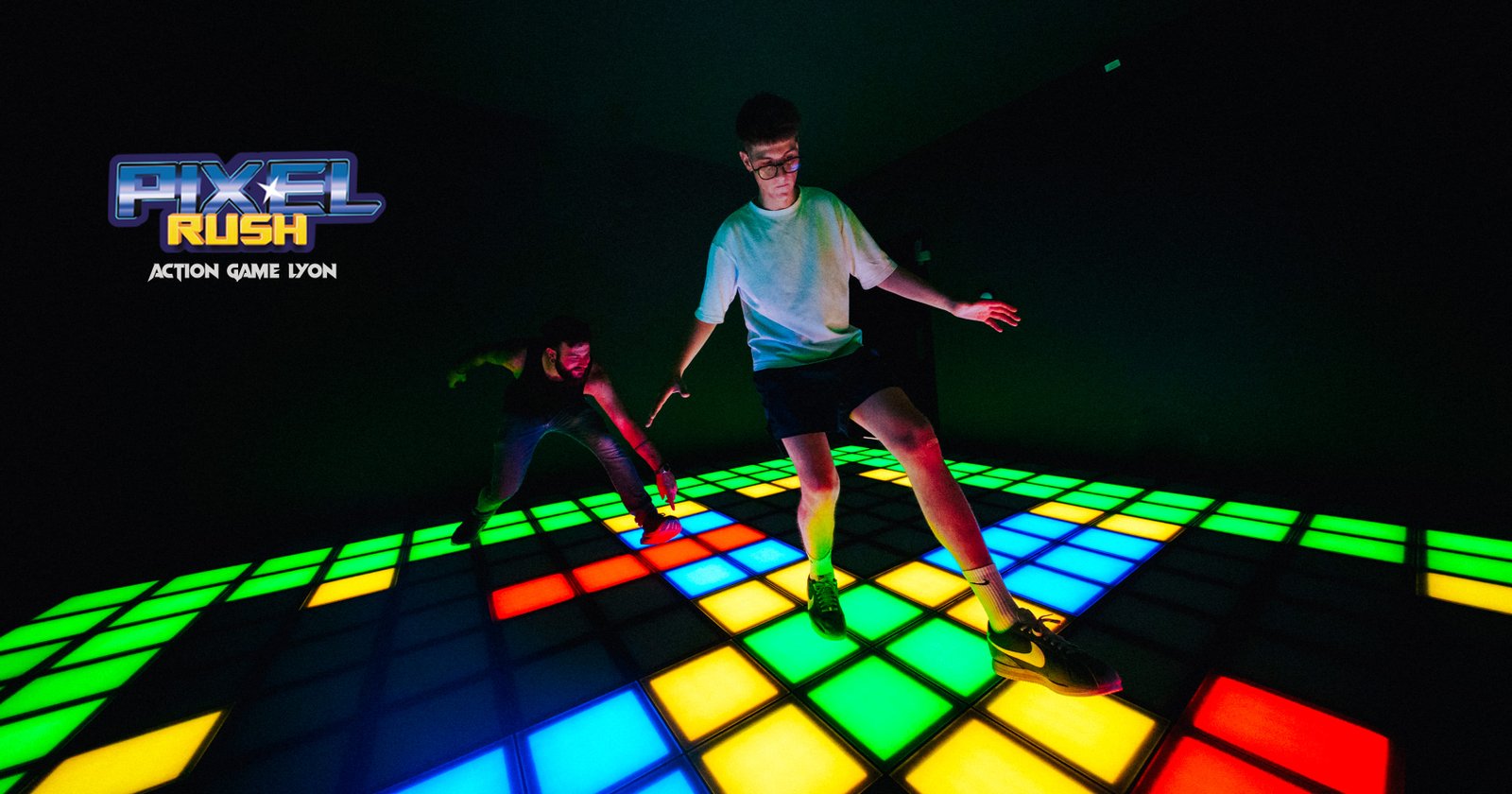
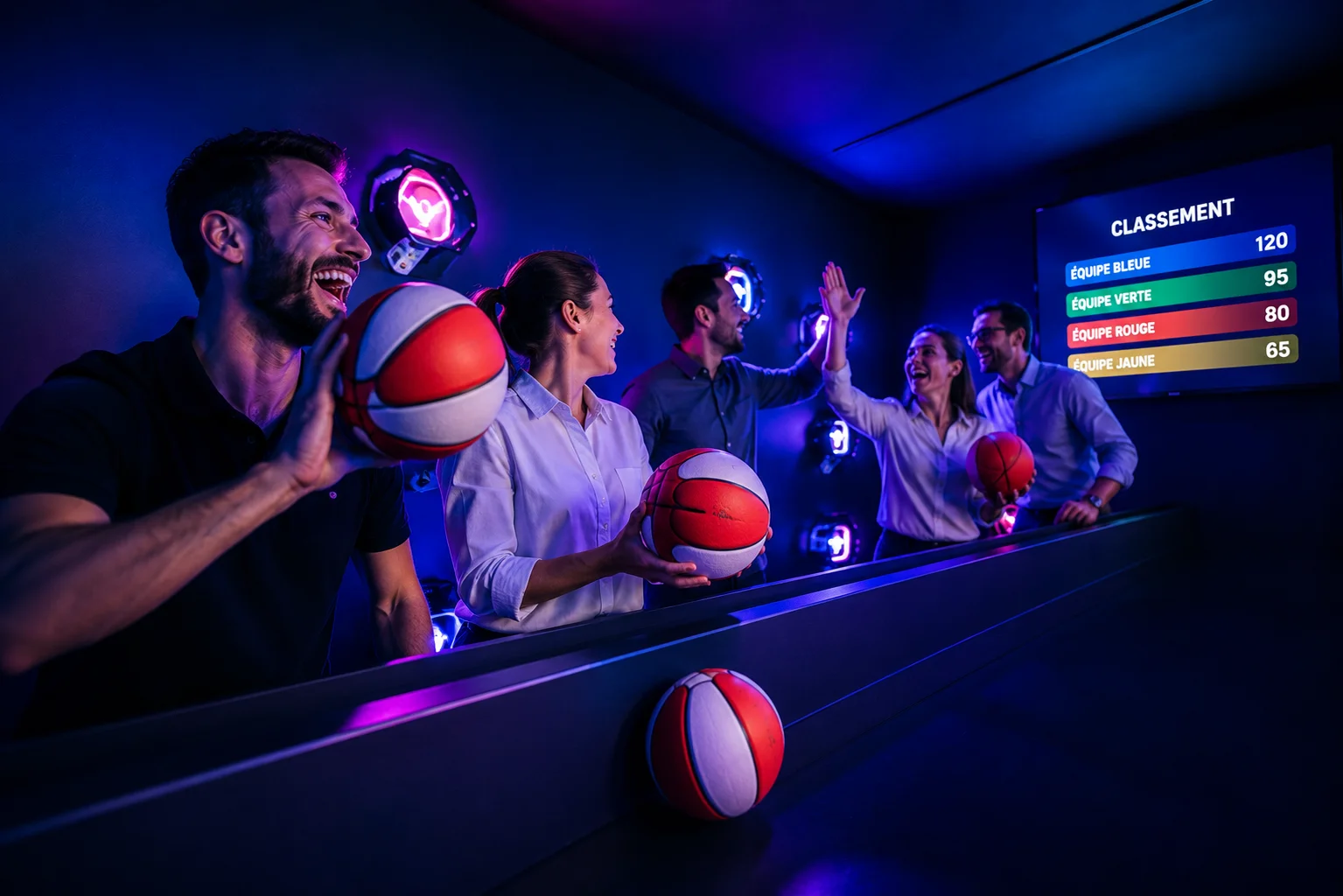
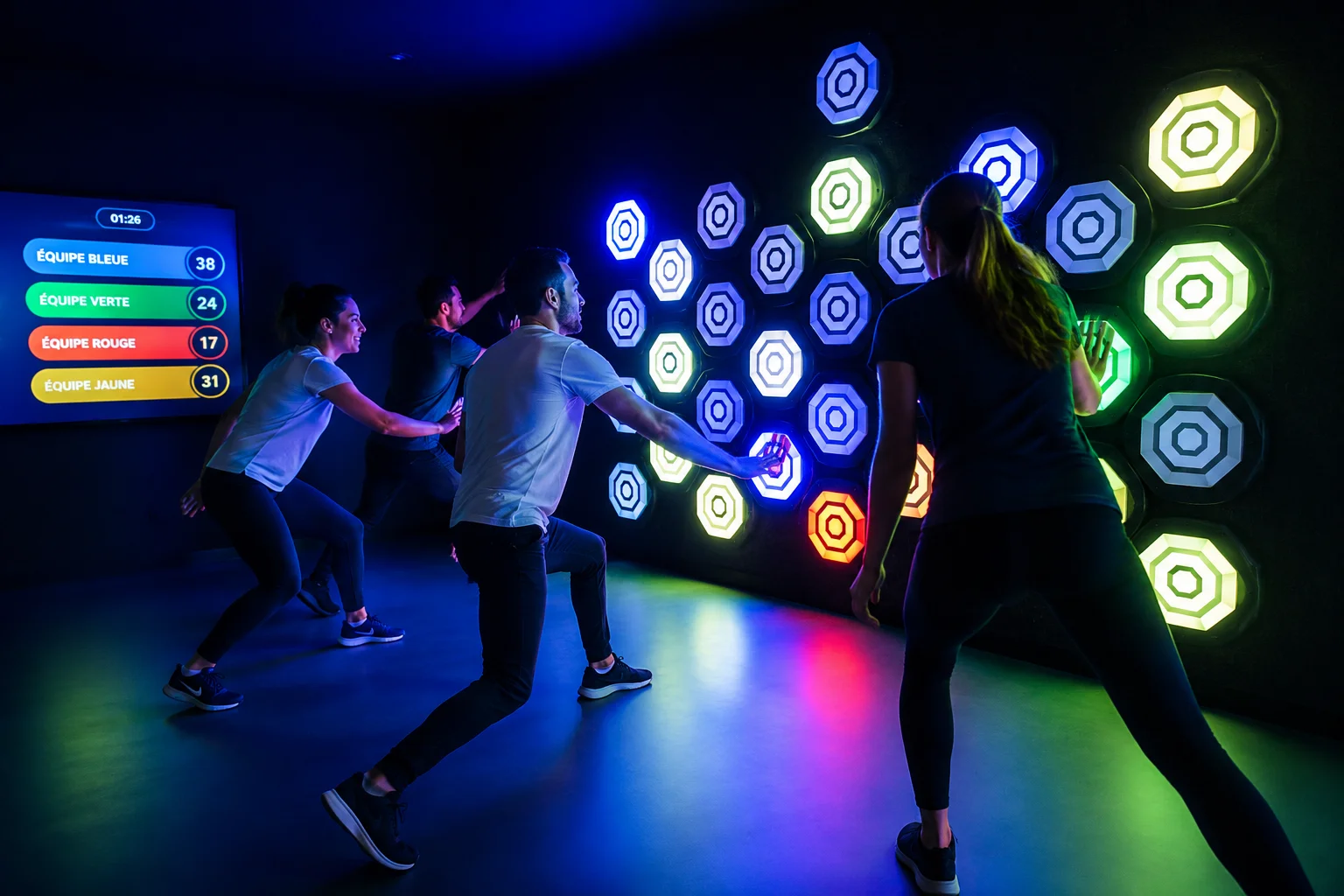
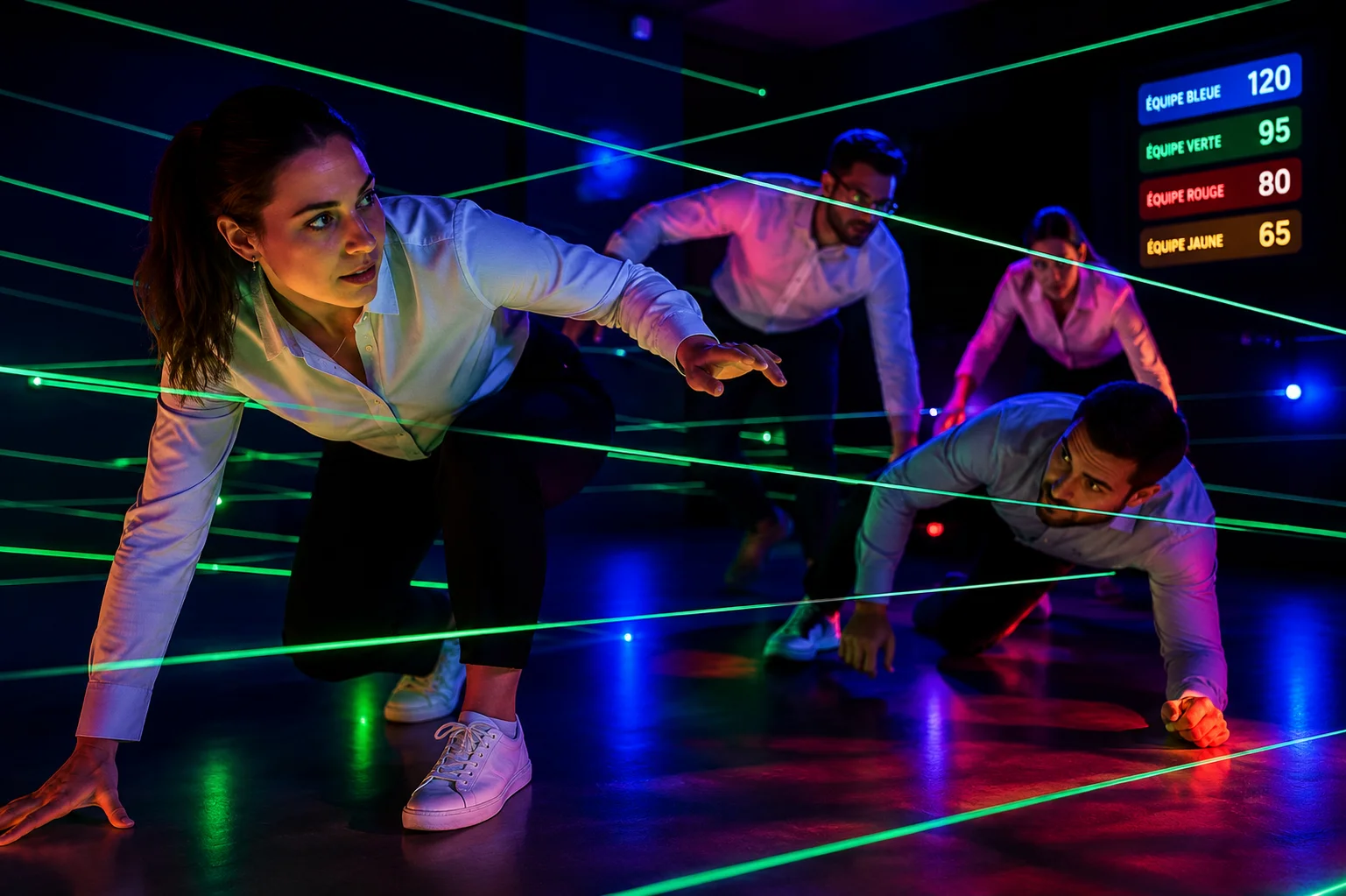
Un action game comme Pixel Rush part d'un principe simple : tout le monde joue, tout le monde bouge, tout le temps. Chaque participant est dans l'arène, sur les défis, en train de courir, viser, coopérer.
Notre complexe propose 8 salles thématiques différentes, Grille, Arène, Lazer, Tacti-Tap, Escalade, Méga Grille, Cache-cache et Basket Rush, avec plus de 300 défis répartis sur plus de 20 modes de jeu. Chaque salle se joue en équipe, dans un format court (chaque jeu dure entre 2 et 5 minutes), avec des modes coopératifs ou compétitifs et des scores affichés en direct. Cette mécanique a trois effets directs sur un groupe d'entreprise.
D'abord, l'énergie. Une activité physique et ludique réveille un groupe comme aucune présentation ne le fera jamais. Après une matinée de réunions, vos collaborateurs ont besoin de bouger, de rire, de se dépenser.
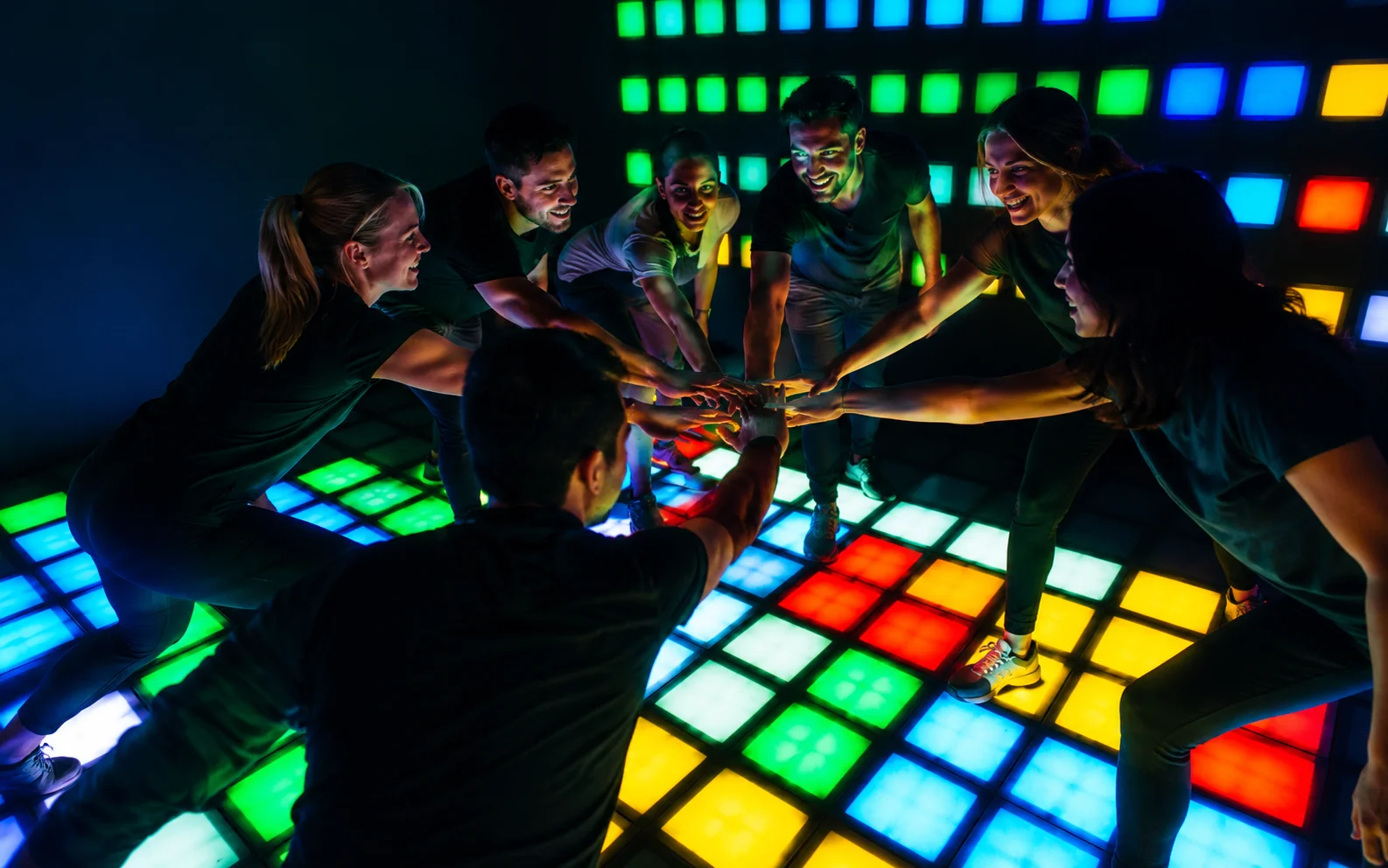
Ensuite, la cohésion par l'action. Quand on relève un défi ensemble, quand on coopère pour battre un score, quand on s'encourage dans l'arène, on crée des liens qui ne se créent pas autour d'une table. Les modes coopératifs obligent à communiquer, à se répartir les rôles, à se faire confiance. Les modes compétitifs, eux, créent cette saine émulation qui rapproche paradoxalement les gens. Dans les deux cas, on sort du registre professionnel et on se découvre autrement.
Enfin, un séminaire réussi, c'est un séminaire dont les gens parlent encore des semaines après. L'intensité d'un action game, le côté un peu spectaculaire des salles, les scores qu'on se rappelle, les fous rires : tout ça reste. Et le bracelet de jeu que chaque participant porte, qui enregistre ses points et sa progression au fil des salles, ajoute cette dimension de défi personnel qui prolonge l'expérience bien après la sortie.
Une activité qui s'adapte à tous les profils
Voici l'objection que tout organisateur se pose, et elle est légitime : "Dans mon équipe, j'ai des profils très différents. Des sportifs et des sédentaires, des jeunes et des moins jeunes, des extravertis et des réservés. Est-ce que tout le monde va pouvoir suivre ?"
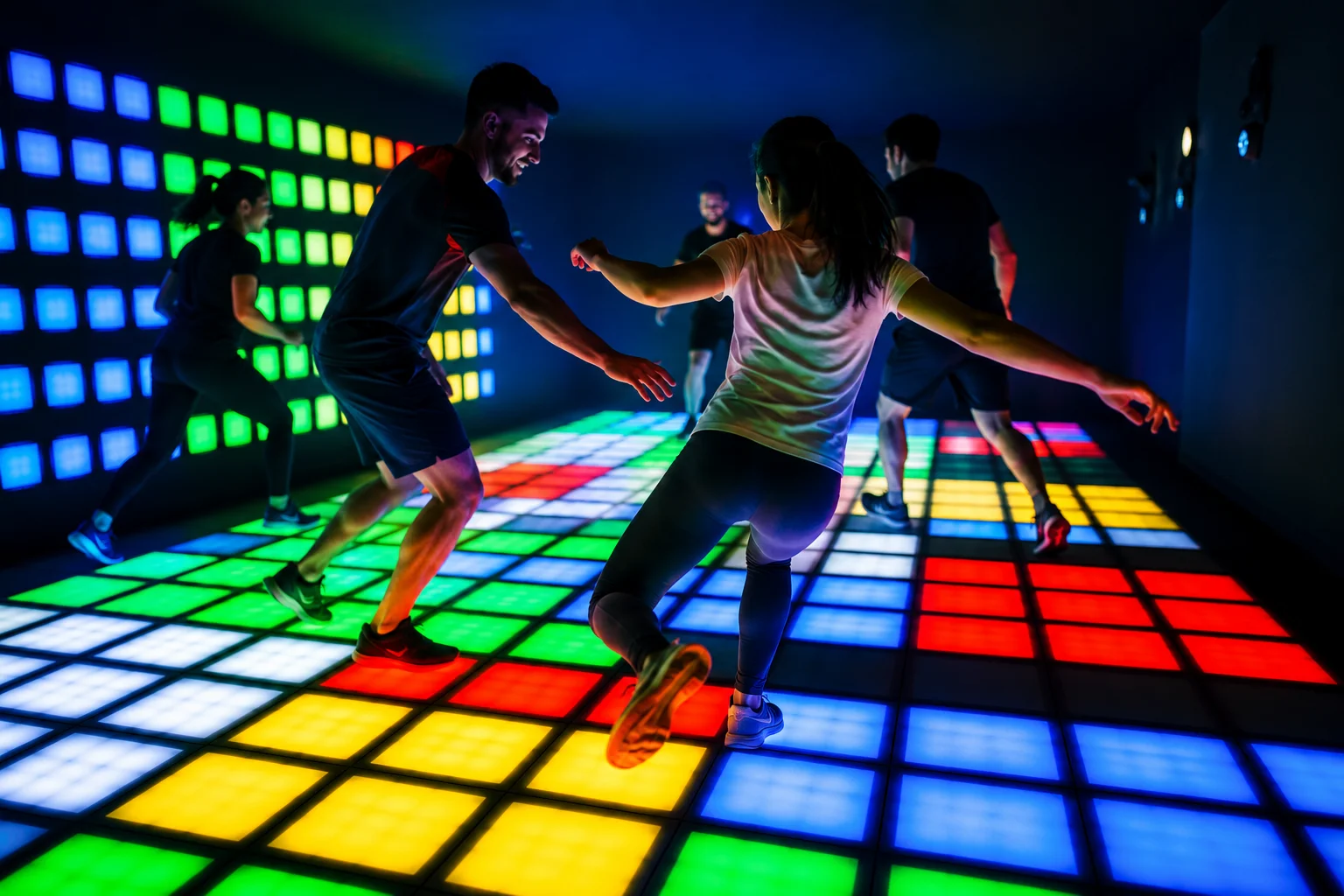
La réponse tient dans le système de niveaux. Chaque salle propose plusieurs niveaux de difficulté ajustables, du plus accessible au plus exigeant. Concrètement, ça veut dire que dans une même salle, au même moment, un collaborateur très à l'aise physiquement peut se challenger sur un niveau difficile pendant que son collègue moins sportif s'amuse sur un niveau adapté à son rythme. Personne n'est laissé de côté, et personne ne s'ennuie.
C'est un point fondamental pour un séminaire, parce qu'une activité trop physique exclut une partie du groupe, et une activité trop facile ennuie l'autre. Le format proposé par notre action game Pixel Rush évite les deux écueils. La diversité des 8 salles joue aussi en votre faveur : entre une salle qui sollicite l'agilité, une autre la précision, une autre la mémoire ou la logique, chacun trouve forcément un terrain où il excelle. Le collègue qu'on n'attendait pas se révèle redoutable au jeu de mémoire ; le commercial bavard découvre qu'il est nul en précision mais imbattable en stratégie. Ces petites surprises sont exactement ce qui crée les souvenirs et les anecdotes.
DEMANDER UN DEVIS PIXEL RUSH !
L'atout logistique : tout au même endroit
Voilà l'aspect que les organisateurs sous-estiment toujours au départ et qui se révèle décisif le jour J : la logistique.
Organiser un séminaire, c'est jongler avec mille détails. Le lieu de réunion, le déjeuner, le transport entre les sites, le matériel de présentation, le stationnement des participants. Multiplier les lieux multiplie les risques : un retard sur un trajet, un groupe qui se disperse, une demi-heure perdue à se regrouper. Chaque transition entre deux endroits est une occasion de perdre du temps et de l'énergie.
L’un des avantages de Pixel Rush pour un séminaire d’entreprise, c’est la simplicité de l’organisation. Le complexe est facilement accessible en voiture comme en transports en commun, avec un parking gratuit sur place ainsi qu’un accès rapide via le métro D et le tramway T6.
Cette facilité logistique permet aux entreprises d’organiser une activité de team-building fluide et sans contrainte, idéale pour renforcer la cohésion d’équipe dans un cadre immersif et dynamique.
Les formules pensées pour les entreprises
Pixel Rush ne se contente pas d'ouvrir ses portes aux groupes : le complexe propose des formules clés en main spécifiquement conçues pour les événements d'entreprise, ce qui simplifie encore le travail de l'organisateur.
Le principe : chaque formule combine l'accès complet aux jeux et une prestation de restauration adaptée à votre moment de la journée. La taille de votre groupe détermine le cadre : les groupes intermédiaires bénéficient des formules standard, tandis que les grands groupes accèdent à la privatisation totale du complexe pour leur événement. Quel que soit ce cadre, chaque formule comprend l'accueil et l'enregistrement des participants, l'accès complet à tous les jeux pendant votre séjour, un débriefing, et un temps dédié dans une salle privative pour le moment de convivialité.
Côté restauration, deux options de formule s'offrent à vous, valables aussi bien pour les groupes intermédiaires que pour les grands groupes en privatisation. La formule « Petit Déj ou Apéro » vous laisse choisir, selon votre créneau, entre une prestation petit-déjeuner (viennoiseries, café et thé à volonté, avec une ouverture exceptionnelle en matinée) idéale pour un séminaire qui démarre tôt, ou une prestation apéritif (planches de charcuterie, fromages affinés et légumes frais de saison) parfaite pour clôturer une journée. La formule « Traiteur », plus complète, ajoute un assortiment de bouchées salées et sucrées pour un moment plus gourmand. Dans tous les cas, une salle de réunion équipée est mise à disposition.
Le complexe propose aussi des options supplémentaires pour personnaliser votre événement : une salle de réunion équipée de 50 m² si vous avez besoin d'un espace de travail dédié plus grand, une vidéo souvenir personnalisée de votre événement, et un branding sur mesure qui affiche le logo et les messages de votre entreprise sur les écrans d'accueil et dans la salle de réunion. Cette dernière option est particulièrement appréciée pour les séminaires qui veulent marquer le coup et renforcer le sentiment d'appartenance.
Comme ces formules s'ajustent à la taille du groupe et à vos besoins, le mieux est de demander un devis personnalisé : vous indiquez votre effectif, votre date et vos envies, et vous recevez une proposition adaptée. Un détail à anticiper toutefois : les créneaux pour les événements d'entreprise sont très demandés et les disponibilités limitées, donc mieux vaut s'y prendre à l'avance.
Où placer l'action game dans votre journée de séminaire
Le moment où vous placez l'activité dans votre programme n'est pas neutre. Chaque option a ses effets, et le bon choix dépend de votre objectif.
En ouverture de séminaire (matin). Démarrer par l'action game, c'est briser la glace immédiatement. C'est particulièrement pertinent si votre séminaire réunit des personnes qui ne se connaissent pas ou peu : différents services, plusieurs sites géographiques, de nouveaux arrivants. L'activité crée une première interaction informelle et détendue, et tout le monde aborde ensuite les sessions de travail dans un climat de complicité. La formule petit-déjeuner, avec son ouverture matinale, se prête bien à ce scénario.
Après le déjeuner (début d'après-midi). C'est le créneau classique, et pour une bonne raison : il combat la fameuse baisse d'énergie de la digestion. Plutôt que de lutter contre les paupières lourdes pendant une présentation post-déjeuner, vous renvoyez tout le monde dans l'arène. Le groupe se réveille, se redynamise et les sessions de l'après-midi en bénéficient directement.
En clôture de séminaire (fin de journée). Terminer par l'action game suivi d'un apéritif, c'est offrir une récompense après une journée de travail intense, et finir sur une bonne note. Les gens repartent sur une émotion positive et c'est cette dernière impression qui reste. La formule apéro ou traiteur prolonge naturellement ce moment de convivialité et permet de débriefer la journée dans une ambiance détendue.
Notre recommandation générale : si votre séminaire est dense en activités, placez l'action game en milieu ou fin de journée. Si l'enjeu principal est de souder un groupe qui se connaît mal, placez-la au début pour créer le lien avant tout le reste.
DEMANDER UN DEVIS PIXEL RUSH !
Comment bien intégrer notre action game à votre séminaire d’entreprise ?
Mélangez les équipes. C'est l'erreur la plus fréquente : reconstituer les équipes de travail habituelles. "L'équipe commerciale ensemble, l'équipe tech ensemble." C'est l'inverse de ce qu'il faut faire. Tout l'intérêt d'un séminaire, c'est de créer des interactions nouvelles. Mélangez le plus possible les équipes : le junior avec le senior, le commercial avec le développeur, la direction avec les opérationnels. C'est dans ces équipes recomposées que naissent les connexions inattendues et c'est précisément ce qui restera ensuite dans le quotidien de l'entreprise.
Anticipez votre réservation. Comme indiqué, les créneaux entreprise partent vite, en particulier sur les périodes prisées (rentrée de septembre, fin d'année, début d'année). Si vous avez une date de séminaire, lancez la demande de devis dès que possible pour sécuriser votre créneau plutôt que de devoir adapter votre programme au dernier moment.
Communiquez en amont auprès des participants. Prévenez vos collaborateurs qu'une activité physique est prévue, pour qu'ils viennent dans une tenue adaptée et des chaussures fermées.
Pensez aux profils particuliers. L'activité étant intense, certaines contre-indications s'appliquent : elle est déconseillée aux personnes ayant des problèmes cardiaques, aux femmes enceintes et aux personnes épileptiques (certaines salles utilisent des effets lumineux rapides). Si vous avez des collaborateurs concernés, prévoyez qu'ils puissent profiter du moment convivial sans participer aux jeux et signalez ces situations lors de l'organisation pour que tout soit anticipé.
Les questions fréquentes des organisateurs
"Combien de personnes peut-on accueillir ?" Le complexe peut recevoir de 10 à 130 participants. Les formules pour groupes intermédiaires conviennent aux équipes d'une dizaine à environ vingt-cinq personnes, et au-delà, la privatisation totale permet d'accueillir les grands groupes jusqu'à 130 personnes. Quelle que soit la taille de votre équipe, il existe une configuration adaptée.
"Combien de temps faut-il prévoir ?" Comptez environ 2 heures au total, ce qui inclut l'accueil et le briefing, le temps de jeu dans les salles, les scores, et le moment de convivialité (apéritif, petit-déjeuner ou repas selon la formule). C'est un format qui s'insère facilement dans une demi-journée de séminaire.
"Et les collaborateurs pas du tout sportifs ?" C'est justement la force du concept. Grâce aux niveaux de difficulté ajustables dans chaque salle, l'activité s'adapte au rythme de chacun.
"Peut-on avoir un espace de travail sur place ?" Oui. Une salle de réunion équipée (tables, chaises, écran, paperboard) est mise à disposition dans les formules, et une salle plus grande de 50 m² est disponible en option si vous avez besoin d'un véritable espace de travail pour enchaîner réunion et activité au même endroit.
"Peut-on personnaliser l'événement aux couleurs de l'entreprise ?" Oui, via l'option de “branding sur mesure” qui affiche votre logo et vos messages sur les écrans d'accueil et dans la salle de réunion. Une vidéo souvenir personnalisée est également disponible pour garder une trace de l'événement.
"Comment connaître le tarif pour mon groupe ?" Les formules s'ajustant à l'effectif, au créneau et aux options choisies, le mieux est de demander un devis personnalisé. Vous renseignez votre effectif, votre date et vos envies et vous recevez une proposition adaptée à votre événement.
Intégrer un action game à votre séminaire d’entreprise : conclusion
Un séminaire d'entreprise réussi repose sur un équilibre : du contenu de travail, mais aussi un moment fort qui soude l'équipe et marque les esprits. La plupart des activités échouent sur ce second point parce qu'elles laissent une partie du groupe spectatrice. Un action game inverse complètement cette logique : tout le monde participe, tout le monde bouge et tout le monde repart avec de jolis souvenirs.
À Lyon, Pixel Rush coche toutes les cases : une activité immersive qui implique 100 % des participants, des niveaux ajustables pour tous les profils, des formules clés en main avec restauration et salle de réunion, et une logistique simplifiée qui réunit travail et activité sous le même toit. Pour un organisateur, c'est la promesse d'un séminaire facile à organiser.
Vous avez une date de séminaire en tête ? Les disponibilités pour les groupes étant limitées, le meilleur réflexe est de demander votre devis dès maintenant pour sécuriser votre créneau.
Cliquez sur le bouton ci-dessous pour demander votre devis personnalisé :
DEMANDER UN DEVIS PIXEL RUSH !
Lire aussi :
30 activités insolites pour un team-building à Lyon
Team-building dans un action game : Pourquoi votre boss ne pourra pas refuser...
← Retour aux articles