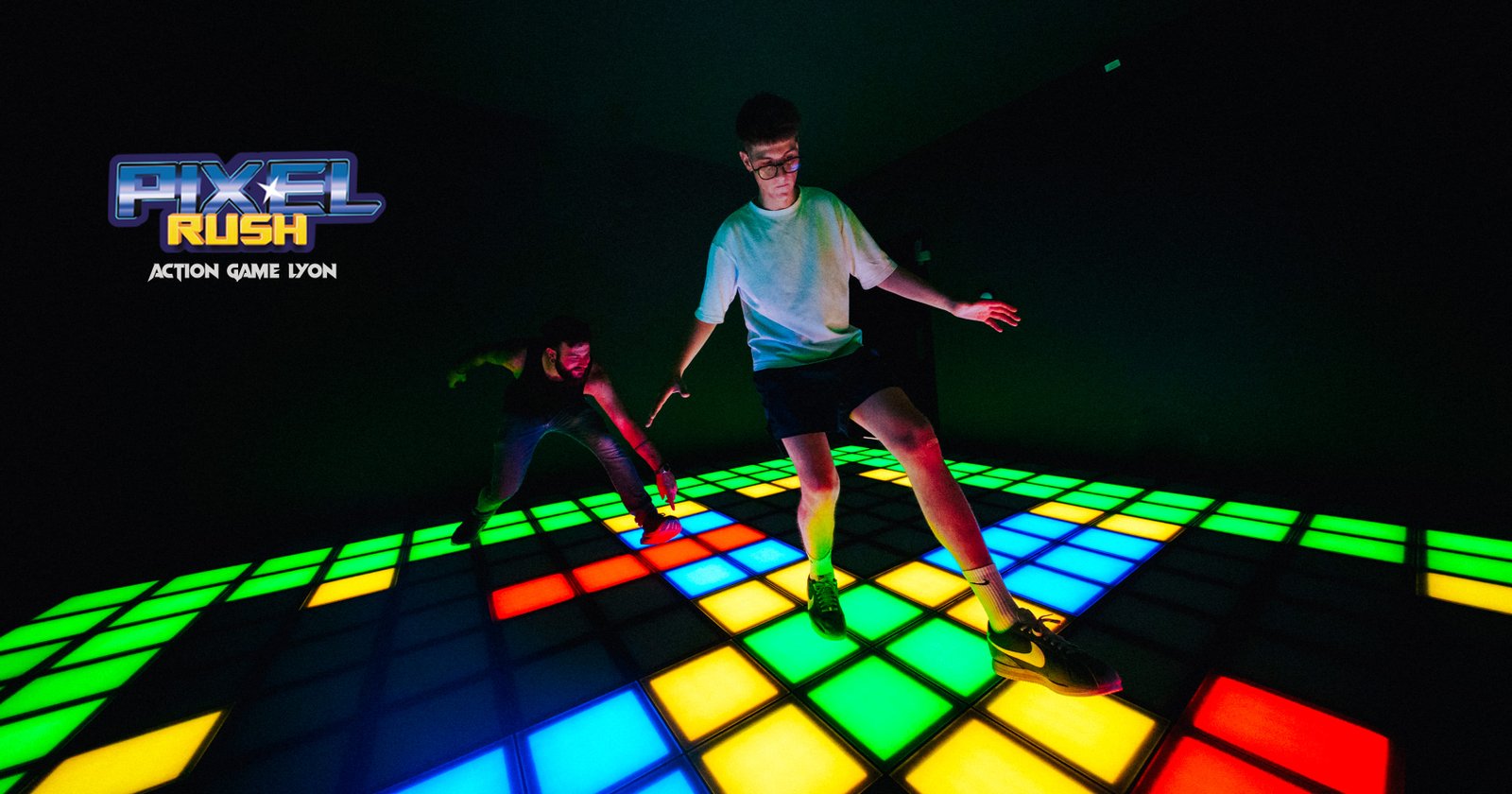
À la sortie d'une session d'action game, les enfants sont souvent enthousiastes, énergiques et impatients de recommencer. Pour eux, il s'agit avant tout d'un moment ludique et stimulant. Pourtant, derrière cette apparente simplicité se cache une activité bien plus riche qu'il n'y paraît. Un action game n'est pas seulement un jeu. C'est un environnement immersif qui mobilise à la fois le corps et l'esprit, et qui favorise le développement de nombreuses compétences essentielles chez l'enfant. À travers le mouvement, la coopération et la résolution de défis, les enfants apprennent… sans avoir le sentiment d'apprendre. Découvrez les 5 compétences que vos enfants développent (sans le savoir) dans un action game !
*Bon à savoir : Les enfants de 6 à 12 ans bénéficient d'un tarif réduit chez Pixel Rush avec une entrée à 19 € par personne au lieu de 25 €.
RÉSERVEZ VOTRE SESSION CHEZ PIXEL RUSH !
1. L'esprit d'équipe et la coopération
Dans un action game, la réussite dépend rarement d'un seul joueur. Les défis sont conçus pour être relevés collectivement : synchronisation des actions, communication entre les participants, répartition des rôles en fonction des points forts de chacun.
Les enfants apprennent ainsi à écouter les autres, à proposer des stratégies, à encourager leurs coéquipiers et à comprendre que la coopération permet d'aller plus loin que l'action individuelle. Cette dynamique s'installe naturellement, sans intervention extérieure, car elle est directement liée à l'objectif du jeu.
C'est une manière concrète et efficace d'expérimenter le travail d'équipe, une compétence essentielle aussi bien à l'école que dans la vie quotidienne. Les enfants qui manquent parfois d'aisance dans les interactions de groupe trouvent ici un cadre structurant, où chacun a un rôle à jouer et où la contribution de chacun est visible et valorisée par le système de points.
Il n'est d'ailleurs pas rare de voir des enfants qui se connaissent peu au début d'une session ressortir en ayant créé de véritables liens, soudés par l'expérience partagée. L'action game agit comme un accélérateur de cohésion, ce qui en fait une activité particulièrement adaptée pour les anniversaires, les sorties entre camarades de classe ou les retrouvailles entre cousins. Les défis communs créent des souvenirs communs, et c'est souvent de ces moments partagés que naissent les amitiés les plus solides.
2. La gestion du stress et des émotions
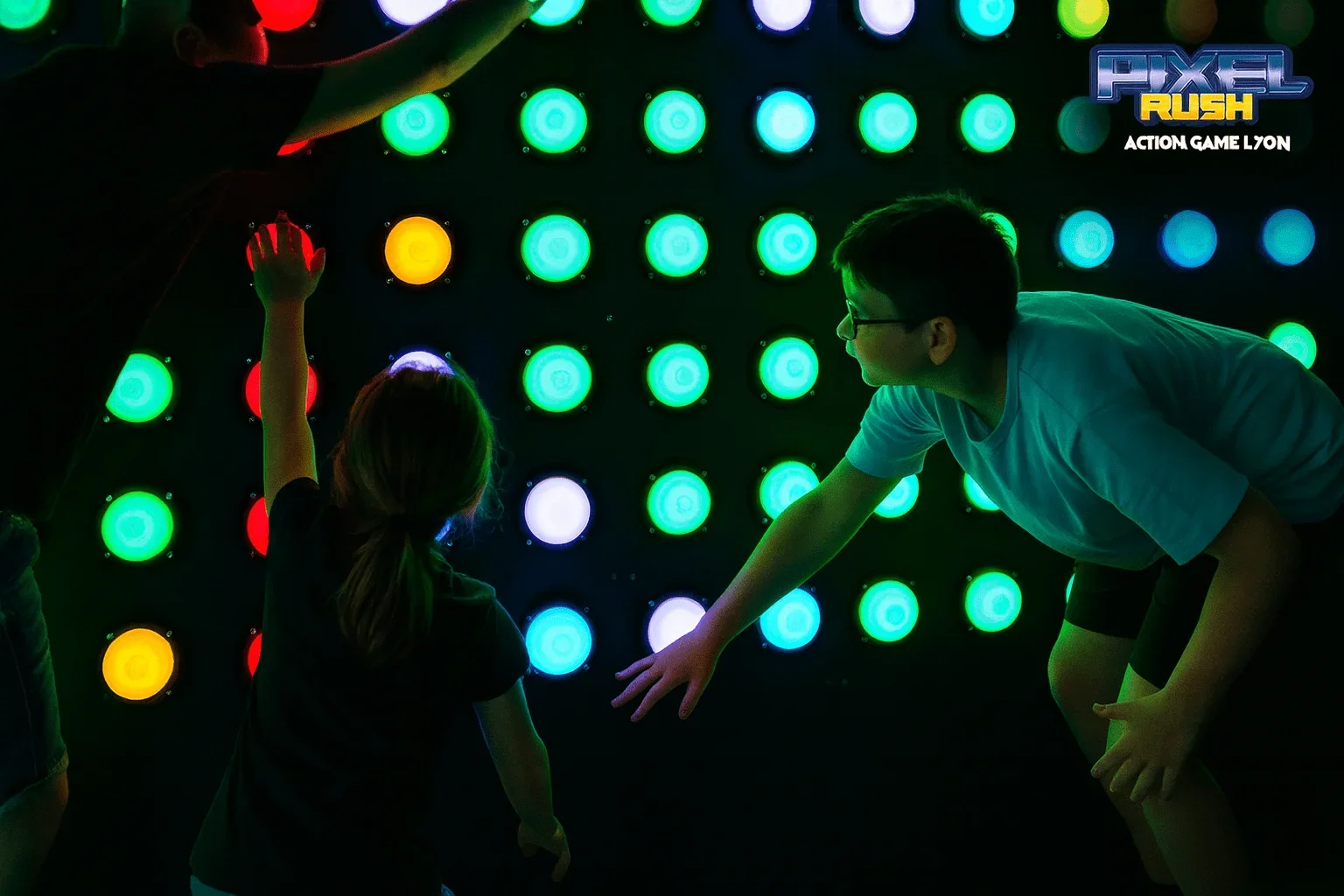
Le compte à rebours défile, les lumières clignotent, le bracelet connecté vibre. Il reste quelques secondes pour terminer l'épreuve. Ce type de situation, récurrent dans un action game, place l'enfant dans un état de pression positive : suffisamment intense pour être stimulant mais sans conséquence réelle en cas d'échec.
Contrairement à un examen scolaire ou à une compétition sportive où le stress est souvent subi et parfois paralysant, la pression d'un action game est choisie, encadrée et ludique. L'enfant sait qu'il ne sera ni noté ni jugé. Mais son corps et son cerveau, eux, apprennent tout de même à fonctionner sous pression.
Ce phénomène est bien documenté en psychologie du développement : l'exposition répétée à des situations qui demandent de réagir rapidement permet à l'enfant de développer des réflexes de régulation émotionnelle. Il apprend à se concentrer sur l'essentiel, à ne pas se laisser submerger par l'urgence et à transformer la pression en énergie positive.
3. La motricité et la coordination
Les études le confirment : les enfants d'aujourd'hui bougent moins qu'avant. Entre les heures passées en classe, les devoirs et le temps d'écran, les occasions de mobiliser pleinement leur corps se font plus rares. Or, le développement moteur de l'enfant repose sur la diversité et la fréquence des mouvements qu'il pratique.
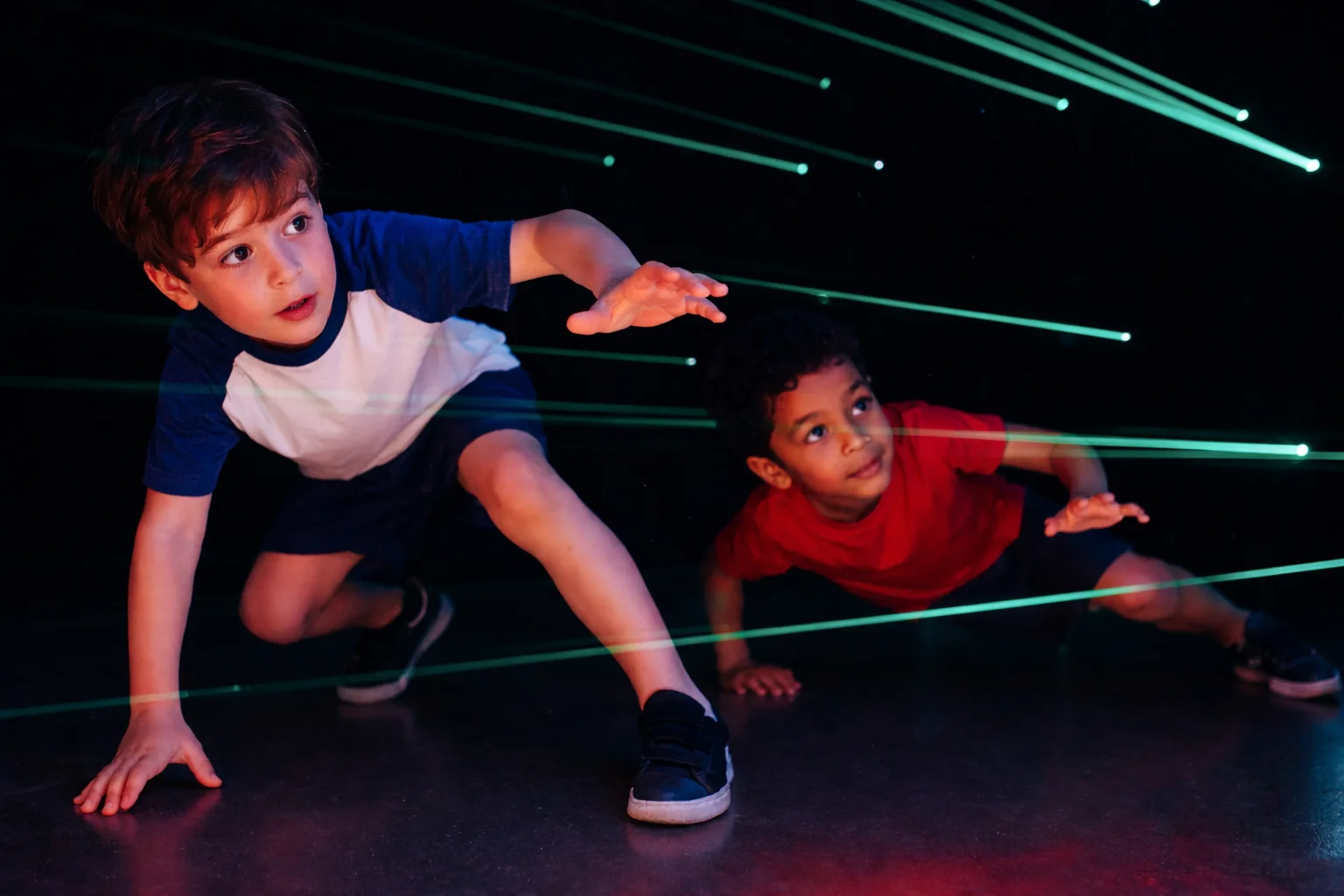
Une session d'action game offre un éventail de sollicitations motrices particulièrement riche. En l'espace d'une heure, les enfants courent entre les salles, sautent pour atteindre des cibles, se baissent pour passer sous des faisceaux lumineux, visent avec précision, escaladent des structures, tapent sur des boutons en rythme et se faufilent entre des obstacles.
Ce type d'activité mobilise à la fois la motricité globale (courir, sauter, grimper, se déplacer dans l'espace) et la motricité fine (viser une cible, manipuler un objet avec précision, toucher un capteur au bon moment). La coordination œil-main, la proprioception et l'équilibre dynamique sont également sollicités en permanence.
L'un des grands avantages de cette approche est que l'effort physique est intégré au jeu. Les enfants ne perçoivent pas l'activité comme un exercice sportif, mais comme un moment de plaisir. Cette dimension ludique lève les résistances que certains enfants peuvent avoir vis-à-vis du sport traditionnel, et leur permet de développer leurs capacités motrices dans un cadre motivant et sans pression de performance.
C'est aussi une réponse pertinente à la problématique des écrans. L'action game reprend les codes que les enfants apprécient dans les jeux vidéo ( scores, progression, défis, classements) en les transposant dans le monde réel. Le corps redevient la manette, et l'activité physique redevient désirable.
RÉSERVEZ VOTRE SESSION CHEZ PIXEL RUSH !
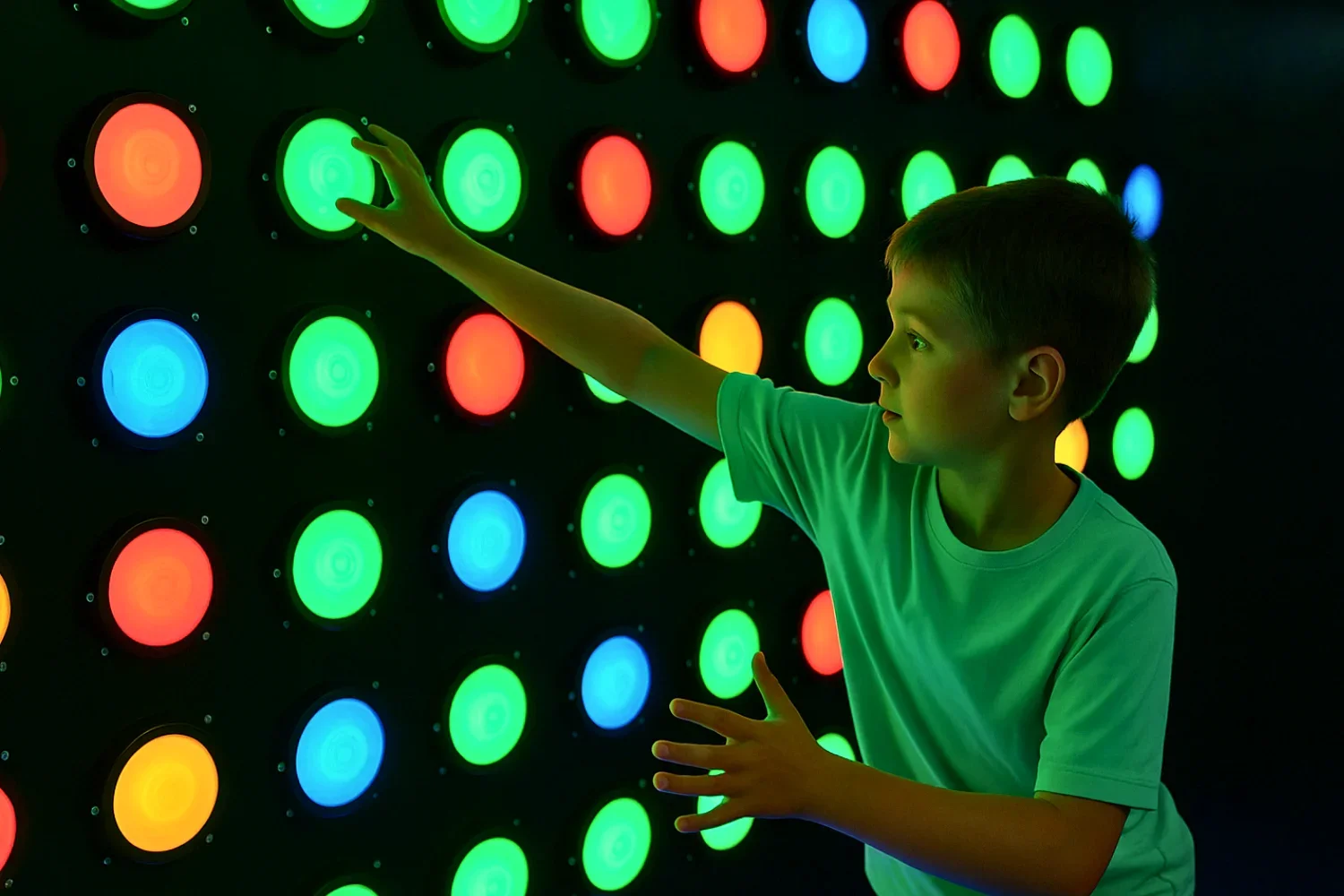
4. La réflexion logique et la résolution de problèmes
Un action game ne se résume pas à une activité physique. Chaque épreuve pose un problème concret à résoudre, et c'est précisément cette dimension cognitive qui rend l'activité si complète.
Les défis proposés font appel à différentes formes de raisonnement : des séquences lumineuses à mémoriser et reproduire, des combinaisons à trouver par élimination, des patterns à identifier, des stratégies à adapter en fonction du temps restant. L'enfant doit observer, analyser, formuler une hypothèse, la tester etc.
Ce processus est exactement celui que l'on cherche à développer dans l'enseignement des sciences et des mathématiques. La différence, c'est qu'ici, l'enfant le vit en temps réel, avec son corps et ses sens, et que la boucle de retour est immédiate : si la stratégie fonctionne, le score augmente. Sinon, il faut essayer autrement. C'est de l'apprentissage par essai-erreur dans sa forme la plus naturelle et la plus efficace.
Au fil des sessions, les enfants développent également une forme d'intelligence tactique : ils apprennent à prioriser les défis les plus rentables en points, à optimiser leur parcours entre les salles, et à répartir les tâches au sein de leur équipe en fonction des compétences de chacun. Ces capacités d'analyse, de planification et d'adaptation sont précisément celles qui seront les plus valorisées dans leur parcours scolaire et, plus tard, professionnel.
5. La confiance en soi et l'estime personnelle
C'est peut-être la compétence la plus précieuse de toutes, et aussi la plus difficile à développer par des méthodes traditionnelles.
Dans un action game, chaque défi réussi constitue une petite victoire personnelle. Traverser un parcours de lasers sans erreur, battre son propre record au défi de rapidité, trouver la combinaison avant les autres joueurs… Chacun de ces micro-succès envoie un message clair au cerveau de l'enfant : « Je suis capable. »
Ce qui rend ce mécanisme particulièrement puissant, c'est que la validation ne vient pas d'un adulte. Elle vient de l'enfant lui-même, qui constate de manière objective et mesurable qu'il a accompli quelque chose. Le système de points et le bracelet connecté offrent un feedback immédiat et factuel : le score est là, la progression est visible, les résultats sont concrets.
Pour les enfants qui manquent d'assurance, qui sont timides ou qui doutent de leurs capacités, l'action game peut agir comme un véritable levier de confiance. L'environnement est bienveillant et non compétitif au sens scolaire du terme : il n'y a pas de « mauvais » joueur, chacun progresse à son rythme, et le format ludique désamorce toute pression de performance.
RÉSERVEZ VOTRE SESSION CHEZ PIXEL RUSH !
Conclusion
En une heure d'action game, les enfants auront travaillé l'esprit d'équipe, expérimenté la gestion de la pression, sollicité l'ensemble de leurs capacités motrices, stimulé leur réflexion logique et renforcé leur confiance en eux. Le tout en ayant le sentiment de s'amuser.
C'est précisément ce qui fait la force de ce concept : les enfants apprennent en jouant, dans un environnement qui respecte leur rythme et qui valorise chaque progression. Il n'y a ni tableau noir, ni évaluation, ni pression. Simplement des défis à relever, du mouvement, de l'interaction et un cerveau qui fonctionne à plein régime sans même s'en apercevoir.
Pour les parents qui cherchent une activité à la fois divertissante et enrichissante, l'action game représente une option particulièrement pertinente. Il combine les bienfaits de l'activité physique, de la stimulation cognitive et de l'interaction sociale dans un format accessible et motivant pour les enfants de tous profils.
Envie de découvrir ces bienfaits par vous-même ? Pixel Rush vous accueille à Lyon dans une arène de plus de 800 m² avec 8 salles thématiques et plus de 300 défis.
*Bon à savoir : Les enfants de 6 à 12 ans bénéficient d'un tarif réduit chez Pixel Rush avec une entrée à 19 € par personne au lieu de 25 €.
RÉSERVEZ VOTRE SESSION CHEZ PIXEL RUSH !
Lire aussi :
15 bonnes raisons d'emmener vos enfants dans un Action Game
30 activités à faire en famille à Lyon
Anniversaire pour enfant à Lyon : 20 idées qui feront de vous le parent le plus cool de l'année
La vraie raison pour laquelle votre enfant devrait fêter son anniversaire dans un action game
32 Activités Pour Ados à Lyon en 2026